
British Folktales Told Around Winter Fires
Why the Wood You Burn Matters
There's an old saying that firewood warms you twice: once when you cut it, once when you burn it. The trouble is, the wrong wood warms you a third time — this time when it spits a live ember onto your sleeping bag, or when the smoke curls back and leaves your evening stew tasting of soot and regret. Whether you're tending a fire pit in the garden, camping on a permitted site, or settling in front of a hearth after a long autumn walk, the fuel you choose shapes everything: the heat, the smell, the cooking, and how long people linger around the flames telling stories.
There's a quieter consideration too. Much of our woodland folklore is bound up with particular trees, and some of our oldest superstitions turn out to be rather good practical advice. Fire is a domestic thing in Britain — small, contained, close to the kitchen — and the traditions that grew up around it reflect that intimacy.
Seasoned Hardwood Is the Gold Standard
Seasoned means dried, and dried means safe. Freshly felled timber can hold half its weight in water. Burn it and most of your fire's energy goes into boiling that moisture off, which is why green wood hisses, smoulders and smokes. Aim for wood with a moisture content below 20 per cent — a cheap moisture meter is one of the best investments a regular fireside cook can make. Split a log, press the pins into the fresh inner face, and take the reading there.
Well-seasoned British hardwoods burn long, hold embers beautifully and smell wonderful:
- Oak — slow, steady and long-lasting; superb for cooking over embers. Give it two years to dry.
- Ash — the traditional favourite. Seasons quickly, burns bright and clean even when slightly green. A year is often enough.
- Beech — dense and even, with excellent embers for baking.
- Hawthorn and blackthorn — fierce heat, ideal for a quick cooking fire.
- Apple, pear and cherry — the fruitwoods, prized for flavour. Applewood smoke is the classic choice for anything you intend to eat.
- Birch — burns hot and fast. Save it for kindling rather than your main fuel.
The Wood to Leave Well Alone
Damp wood is the first thing to refuse. If a log feels heavy, looks dark at the ends or is cold to the back of your hand, it isn't ready. Then there are the resinous softwoods — pine, spruce, larch and fir — which burn fast, throw sparks and coat your chimney with sticky creosote. That last point matters in a woodburner, but out in the open it's simply unpleasant: a resinous fire will send embers into your hair and leave a tarry tang on anything you cook.
Driftwood is best avoided too, particularly from saltwater. Burning it releases dioxins and corrodes metal grates and cooking irons.
Our folklore agrees with the practicalities here more often than you might expect. Elder carries one of the strongest taboos in the British Isles: Elder be ye Lady's tree, burn it not or cursed ye'll be. The Elder Mother was said to guard the tree, and harming it brought misfortune. Elder is also hollow-stemmed and pithy — genuinely poor firewood. Rowan and hawthorn are fairy trees, unlucky to cut, and both are far more valuable standing for wildlife than smouldering in your fire pit. Listen to the old stories; they rarely steer you wrong.
Never Gather Deadwood from Protected Woodland Floors
It's tempting. A dry branch lying on the forest floor looks like free fuel. It isn't. In England and Wales, taking wood of any kind without the landowner's permission is theft, and on protected sites — Sites of Special Scientific Interest, nature reserves, ancient semi-natural woodland — it's a criminal offence under the Wildlife and Countryside Act 1981. Fines are substantial and ignorance is no defence.
Beyond the law, deadwood is not waste. It is one of the richest habitats we have. Fallen timber supports stag beetle larvae, rare fungi, bats, beetles and a whole quiet economy of invertebrates that in turn feed our woodland birds. A single rotting log can be home to hundreds of species. Clearing it to boil a billy can is a poor bargain.
Take a moment, too, before loading up a trailer of "free" logs from a roadside or a mate's clearance. Chalara ash dieback and other tree diseases spread readily on moved timber. Buying locally grown, properly seasoned wood — ideally from a coppiced or managed British woodland — is the responsible choice.
Buying and Storing Well
Ask your supplier three questions: where was it grown, what species is it, and when was it felled and dried? A good merchant will answer all three without hesitation. Kiln-dried logs cost more but you burn less of them, so the arithmetic often works out.
At home, store your wood properly and it will improve rather than rot:
- Stack it off the ground on pallets or rails, never directly on soil or concrete.
- Leave gaps — a single log's width — between pieces so air moves through.
- Cover the top only, never the sides. A tarpaulin draped over the whole stack traps moisture and breeds mould.
- Keep it away from house walls, which stay damp.
- Let air-dried hardwood rest at least a year, oak for two.
Cooking and Storytelling Round the Embers
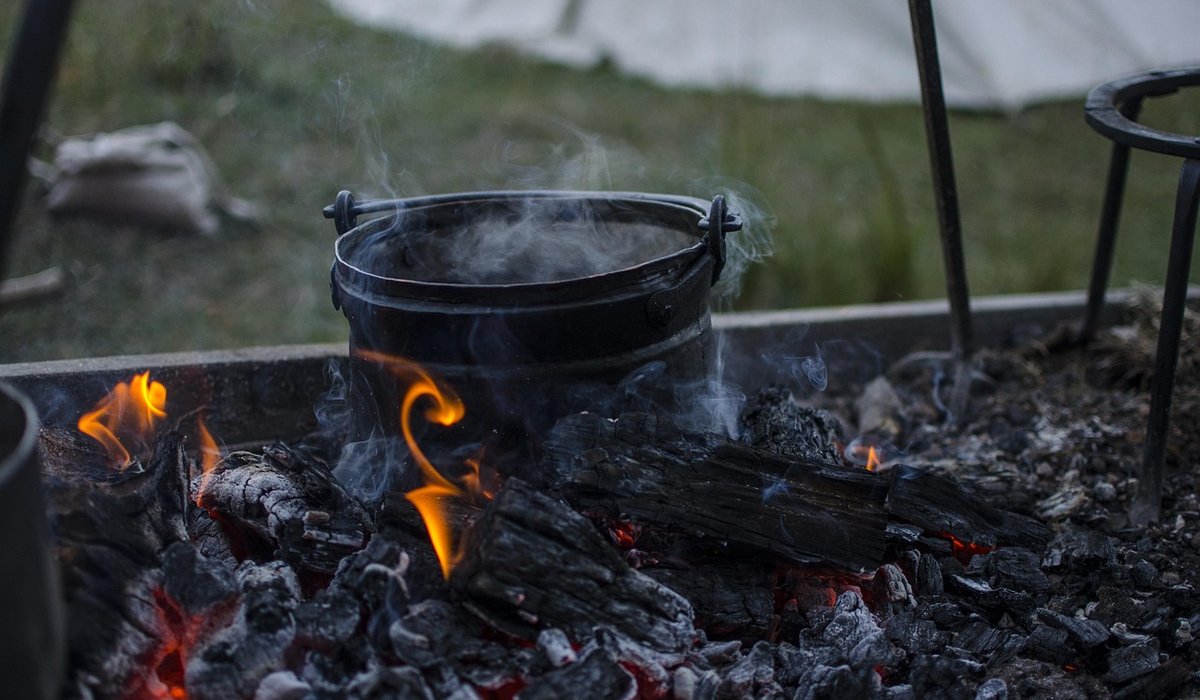
The best fireside cooking happens when the flames have died. Wait for that grey-red glow, then rake the embers flat with a stick. Ash and oak embers will hold heat for an hour or more, perfect for baking flatbreads, potatoes or a bannock buried in the ash and brushed clean afterwards. Applewood adds a gentle sweetness to fish and game. Whatever you cook, never use resinous wood for it — the taint is unmistakable and impossible to rescue.
And then, when the embers settle and the flames have dropped, comes the best part. This is when stories get told. British fire festivals — Samhain, Yule, Beltane — were always built around exactly this moment, with the fire as the thing that gathered people and held their attention. So keep the circle small, keep a bucket of water within reach, and never leave a fire unattended. Douse it properly, stir the ashes, and douse again until everything is cold to the touch. Then head home smelling of woodsmoke, which is, on balance, the finest smell there is.
LEAVE A COMMENT