
Hearth Spirits in Old English Household Stories
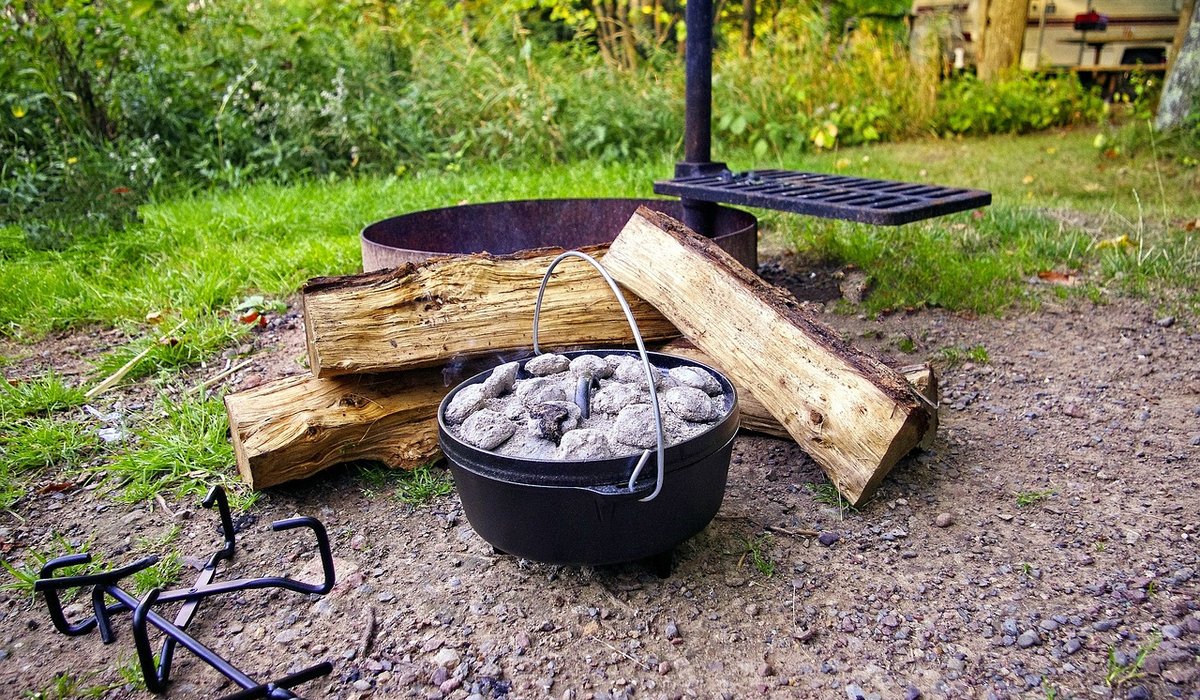
There is a particular pleasure in a fire built on ground that squelches underfoot: the smell of wet moss warming, the small struggle against damp, the way everyone leans closer. But wet ground punishes a careless fire. Water sits in the ash, smoke rolls low, the soil beneath gets scalded into a sterile patch, and you end the evening smelling like a damp bonfire rather than a hearth. The fix is simple and old-fashioned: clear a small area, line it, and lift the fire off the ground.
Choose the Spot Before You Choose the Fire
On boggy, clay-heavy or recently rained-on ground, drainage decides everything. Walk the site in daylight and look for a slight rise, a hummock, or land where surface water is already running away from you. Avoid hollows, spring lines, the bottoms of slopes, the edges of ponds and ditches, and anywhere that squelches with each step, because those places will fill with water as soon as you sit down.
Then check what is above and beside you. Keep three metres at least from tents, tarps, hedgerows and tree trunks, and much more from conifers, gorse and dry bracken. Roots smoulder underground for days. Overhanging branches drop embers, and a sheltered corner that feels cosy may be a wind tunnel once the fire is lit. If you are on a campsite or a managed common, ask first, and follow the local rules on open fires and fire bowls.
Clear a Small Area and Protect the Soil
Resist the urge to build big. A working circle two to three metres across is plenty for a fire and four or five people. Clear leaf litter, twigs, fallen pine needles and matted dead grass back to bare soil, keeping the cleared patch modest so you are not stripping a whole glade.
Where the ground is soft and grassy, lift the turf in shallow slabs, about five centimetres deep, and stack them green side up in the shade with a little water if the weather is dry. They will knit back almost invisibly when you replace them. Do not dig a pit. A sunken fire in wet ground becomes a sump: water seeps in from the sides, ash turns to slurry, and the heat cooks the soil below into a hard, dead pan that takes years to recover.
Raise the Base and Build in Layers
This is the heart of it. A fire needs air underneath and dry ground beneath that.
- Layer one: a fire blanket, a heavy fire mat or a deep metal tray. These catch ash, embers and spills, and they insulate the soil from the worst of the heat.
- Layer two: five centimetres of dry sand or fine gravel inside the mat or tray. Damp sand steams and spits, so bring it dry or use a bag kept under cover.
- Layer three: bearers. On firm ground, a couple of stout logs laid parallel, or a criss-cross raft of four short green logs, lift everything clear of the wet. On really soft ground, build the raft wider so it spreads the weight.
- Layer four: a grate, grill or shallow fire bowl on top, so combustion air can draw from below and embers never touch the saturated ground.
That air gap is what stops the low, sulky, eye-watering smoulder that damp conditions otherwise guarantee. It also means the ground underneath stays cool enough to keep its worms, fungi and seed bank alive.
Stones, Fuel and a Steady Burn
If you want a stone ring, use only dry stones that have been out of water for weeks. Never take stones from a stream, a beach or a permanently damp wall: trapped water flashes to steam and splits them, sometimes with enough force to throw fragments. Limestone, sandstone and flint are all prone to spalling; dense old brick or the dry stones already lying about are safer. Keep the ring low, perhaps ten to fifteen centimetres, so air can still reach the fuel. Leave the windward side slightly lower, or pull one stone out to make a draught.
Fuel matters more than usual in the wet. Seasoned hardwood such as ash, oak, hazel or birch, split to wrist thickness, burns hot and clean; unseasoned wood hisses, smokes and chills everyone. Store it on a pallet under a tarp, and keep a small dry bundle aside for reviving a flagging fire. Feed little and often. A fire thirty to forty centimetres across throws plenty of heat, and a small fire is easier to control, easier to douse and gentler on the ground. If rain is likely, rig a tarp high above, at least two metres up and angled to shed water, so smoke still has somewhere to go.
Fireside Folklore: Telling Tales in the Damp Dark
In Scotland, the last task of the night was smooring the fire: banking the embers under a layer of ash so the flame slept rather than died, ready to be woken in the morning. A hearth was the luck of a house, and borrowing a light from a neighbour carried its own obligations. Folk memory is full of fireside visitors, too: boggarts in the Yorkshire dales, bogles in the fens, black dogs on lonely lanes, piskies on the moors, all of them kept at the edge of the light.
That is the practical magic of a small fire. It narrows the circle, which is exactly what a story needs. Put the fire between teller and listeners, sit close enough that faces are lit from below, and start with something short while the wood is still cracking. As the flames settle and voices drop, bring out the longer tale. One teller at a time, and the dark does the rest.
Dousing, Ash and Leaving No Trace
When the evening ends, douse the fire with water, stir the ash to the bottom, douse again, and repeat until nothing is warm to the touch. Cold ash can be carried home or scattered thinly; wood ash is alkaline, so never tip a heap onto heathland, moss or a single plant. Lift out the bearers and tray, replace the turf, water it in, and scatter any leftover leaf litter back over the scar. Done well, the only sign you were there is a faint dark patch that will green over in a fortnight.
LEAVE A COMMENT