
Foraging Wild Garlic for Campfire Pestos
Why the Fire Tells Half the Story
You don't need a torch under the chin or a spooky voice. A campfire is already doing most of the work: it lights faces from below, keeps the dark pressed in at the edge of the circle, and gives you a rhythm of flicker and settle that no sitting room can match. Your job is smaller than you think.
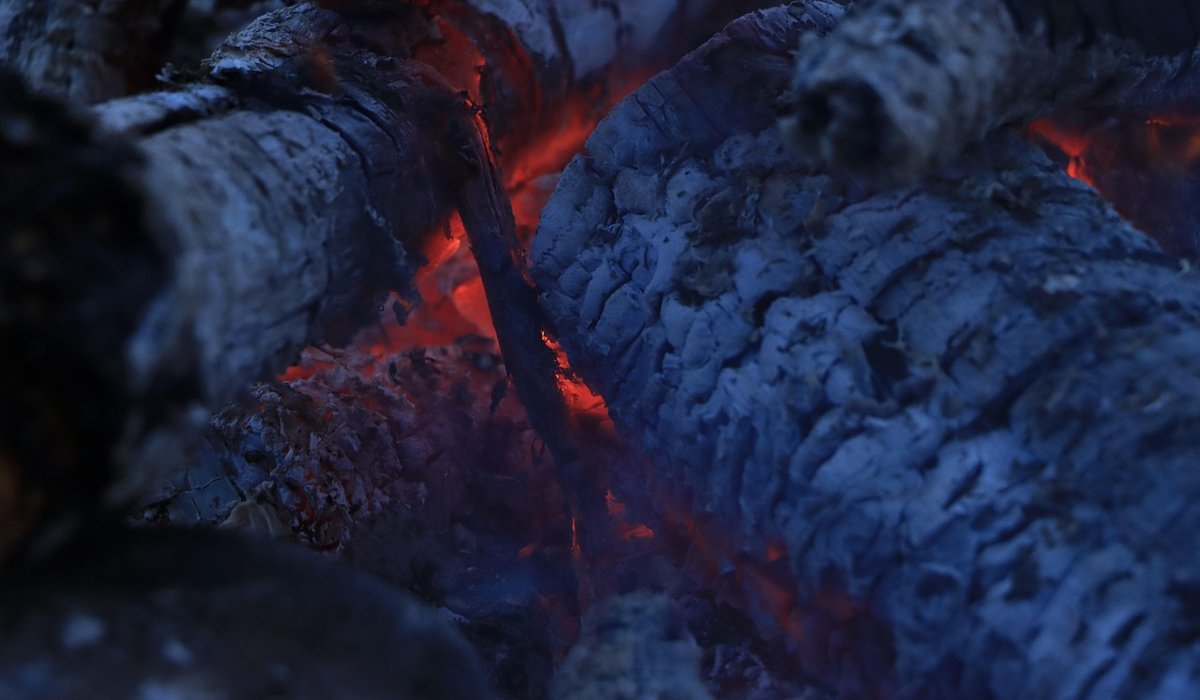
Keep the fire low. A knee-high blaze built from one or two logs over a good bed of embers is plenty, and it should be burning down rather than up by the time you start. A roaring fire makes people cheerful and chatty; embers make them quiet and inclined to lean in. That is the mood you are after, so resist the urge to stoke it. Adding a log mid-tale sends up a burst of flame and light, and the spell breaks.
Feed Them First
Ghost stories land best on a full stomach, and cooking over the fire buys you the time you need to get everyone sitting still. Start with the food, then tell the tales once the plates are cleared and the mugs are poured. Nobody wanders off halfway through if they are holding something hot.
- Bannock: flour, a pinch of salt, a teaspoon of baking powder and enough water to make a stiff dough. Wrap it round a green stick and hold it over embers, not flames, for ten to twelve minutes, turning often.
- Ember potatoes: prick them, wrap them in foil, bury them in the ember bed for forty-five minutes to an hour, then split and fill with butter and sharp cheese.
- Baked apples: core them, stuff with raisins and brown sugar, wrap in foil and bury for twenty minutes or so.
- Cocoa in a billy can, kept warm at the edge of the fire, because a hot drink in the hand has a wonderful way of keeping people exactly where they are.
Choose Something Short and Rooted in the Landscape
Aim for five to eight minutes. One incident, two or three people, one clear place. The best fireside tales are already lying about in the British countryside, so borrow one and anchor it to the parish you are sitting in: a mile up the road, past the second gate. A place name is worth three adjectives.
- East Anglia: Black Shuck, the church door at Blythburgh, and the scorch marks that are still pointed out.
- Yorkshire and the northern counties: the barghest, or a boggart that follows a family from farm to farm and will not be left behind.
- Dartmoor and the high moors: the hairy hands that take the wheel on a certain stretch of road.
- Kent and the old trunk roads: the hitchhiker who vanishes from the back seat before the turning.
- Cornwall, the Fens and the coast: the mermaid of Zennor, or a lantern man walking the marsh with his light.
Set the Scene Before You Speak
Position matters more than props. Sit with the dark at your back and the fire between you and your listeners, so they are looking past you into blackness. Kill the torches and turn off phone screens — ask everyone to shuffle closer rather than turn a light on. If the wind moves in the trees, or an owl calls, or a dog barks two fields away, let it happen and do not talk over it.
Then begin in the middle of something, quietly. Not "right, I'm going to tell you a story" — that is a teacher's line. Try: "She was on the last bus home, and she was the only one on it."
The Pause Is the Scariest Thing You Own
Detail, pause, detail. When you reach the part that matters, slow down and drop your voice; quieter is always more frightening than louder. Count two slow breaths in your head before you carry on. It will feel absurdly long, and it will be exactly right.
Pick out one or two senses rather than five — the smell of wet wool, a gate clicking shut behind you, candle smoke. Avoid the word "suddenly", which announces the fright instead of delivering it. Use the true-story frame knowingly: "This happened to a friend of my grandfather's." It is a device as old as the campfire, and listeners want permission to believe, not proof.
End Small, Then Say Nothing
The ending is where most tellers spoil it. Do not jump, do not shout, and do not explain. Stop on an image rather than a resolution: the footprints that stop halfway up the lane, the knock that came from inside the wardrobe, the dog that refuses to cross the bridge. Leave one detail loose on purpose so your listeners have to finish the story themselves.
Then stay quiet. Let the silence stretch until somebody else speaks first. If they lean in with questions, you have done it properly; if they laugh, that is a good night too. Only once the quiet has settled should you hand the cocoa round and put the big log on. Keep one tale back for tomorrow.
LEAVE A COMMENT