
Gathering Family Stories for a Fireside Evening
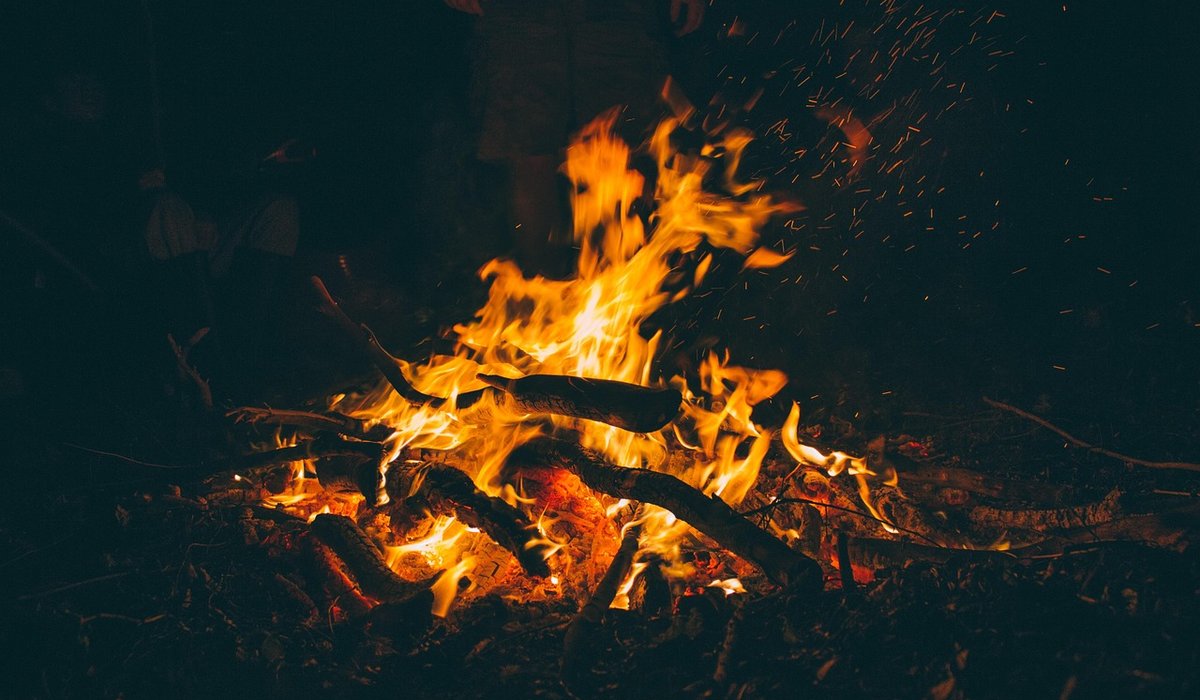
Fires That Answered the Sea
On a still evening at Prussia Cove or the rocks below Zennor, the smoke rises straight for a while and then, quite suddenly, leans out over the water as if it has heard something you haven't. Anyone who has cooked supper on a Cornish shore knows that feeling. The fire and the sea are in conversation, and you are simply sitting between them.
Cornish fireside tradition grew out of that conversation. Along a coast where the weather turns in twenty minutes and the nearest help is often a matter of sail, flame was never just warmth. It was a signal, a warning, a comfort and, occasionally, a lie told to a stranger in a boat. Learning to read it was as ordinary as knowing the tide.
Reading the Flames: Omens from the Hearth
Before electricity, a household fire was read the way we now read a forecast. Low flame — a lowe, in the old dialect — that burned blue at the base was said to mean weather on the turn. Sparks flying from the coals towards a person meant money or news arriving. A fire that sulked and refused to draw was trouble: someone coming who would not be welcome.
Fishermen carried the reading to the shore. Whistling indoors was thought to call the wind, and a whistle by the hearth on a calm night was asking for a squall. Salt thrown on the coals quietened an argument, though everyone knew the spitting that followed. In mining families, tapping in the timbers meant the knockers were near, and a fire left burning low overnight was a courtesy to whatever shared the house.
Different coves told it differently, which is exactly how you know the stories are old. A version from Mousehole would not survive a winter in St Ives.
False Lights and the Free Trade
The darker side of coastal fire was the false light. Victorian newspapers loved the tale of wreckers luring ships onto the rocks with a lantern tied to a horse's tail, and clergymen wrote sermons about it. Historians are rightly sceptical of the scale, but the smuggler's signal fire is another matter altogether.
Along the run from Cawsand to Polperro and round to Prussia Cove, kegs of brandy and Holland gin came ashore in tub boats, and the cliff tops carried messages in flame. One light on a headland meant the coast was clear; two meant the revenue men were about. Lantern shutters, hung cloth and stacked furze all did the work. Families kept to the code so well that children learned it before their prayers, and the memory of it lingers in place names and in stories told with one eye on the door.
What to Burn on the Cornish Coast
If you want to cook on a fire here, the fuel matters more than the equipment. Furze — gorse — burns fast, hot and fierce with a fine white ash, which makes it ideal for boiling a kettle and hopeless for a long slow bake. Oak and ash give you the steady coals you want for fish. Blackthorn spits but holds heat beautifully.
- Kindling: dry furze twigs, dead gorse stems and a handful of birch bark. Collect only from the ground, never from living plants.
- Body of the fire: oak, ash or blackthorn, split to forearm thickness.
- Driftwood: burns hot and bright but crackles and spits from the salt, and painted or treated timber should stay out of the fire entirely.
- Avoid: resinous softwoods for cooking — they tar your food and your pan — and anything you cannot identify.
- Never: light a fire on pebbles or wet flint, which can crack and throw fragments. Use a fire bowl, a raised tray or bare earth, at least three metres from vegetation.
Check local byelaws before you go. Much of the coast is protected, and a fire on a Site of Special Scientific Interest or on National Trust land is not worth the fine or the damage. Douse thoroughly, wait, douse again, and scatter the ash only once it is cold to the back of your hand.
A Fireside Supper Worth the Wait
Let the flames die down until the coals glow orange with a grey film over them. That is your oven.
For mackerel, gut and wash the fish, season inside and out, and lay a few sprigs of fennel or a slice of lemon in the belly. Wrap each one in a double layer of wet newspaper or a sheet of dulse seaweed, then tuck it into the coals. Ten minutes on each side is usually enough; the paper will char and the fish will steam. Serve with buttered new potatoes and a squeeze of lemon.
A pasty reheats beautifully in the embers, wrapped in foil and turned twice, in about twenty minutes. Warm saffron buns the same way for a few minutes only — they catch quickly. Brew tea in an enamel pot and let it steep while you eat. The sea will keep an eye on the weather for you.
Telling Tales So They're Believed
Storytelling around a fire is a craft, not a performance. Wait until the light has properly gone and the flames have dropped to embers. Voices carry over water, so you never need to raise yours.
Start with the place you are sitting in — the mermaid of Zennor, the Bucca who wanted his share of the catch, the knockers under the tin. Keep it to ten minutes. Name the cove, name the family, give one detail that no one could invent. Then stop, and let the fire fill the silence.
If you are with children, give them a stone to hold and pass on when their turn comes. If you are with adults, hand round a dram and let someone else take the next one. The best fireside stories are not finished so much as banked, like coals, ready for the next evening the wind allows.
LEAVE A COMMENT