
Foil-Wrapped Fish with Lemon and Herbs
Why the Circle Matters
There is something about a fire that loosens the tongue. Long before books, people gathered round a blaze and handed stories from one pair of hands to another. The ring of faces is not decoration. It puts everyone the same distance from the light, and nobody sits at the head of the table. Whether you are in a back garden in Sheffield, a corner of a campsite in the Cairngorms, or on a windswept Pembrokeshire beach, the principle holds. Get the shape right and the talking largely looks after itself.
Laying Out the Ground
Start with safety, then comfort. Clear the ground of leaf litter and dry grass, and site the fire at least three metres from tents, hedges and low branches. Once that is settled, arrange your seating properly, because a loose huddle breaks the spell.
- Logs for seats: lengths of birch or ash about 40–50cm in diameter make good perches. Split ones are more stable than round ones, which roll.
- Even spacing: leave roughly 70–80cm between each seat so people can lean in without elbowing a neighbour.
- A gap in the ring: keep one opening, ideally facing the path you arrived by. It stops the circle feeling like a trap and gives latecomers somewhere to step in.
- Backs to the wind: shelter the ring with a bank, a hedge or a windscreen so smoke drifts away from faces rather than into them.
If children are joining, give them a log slightly further back. They will shuffle forward anyway, but the starting position saves a lot of negotiation.
Keep the Fire Small
A storytelling fire is a hearth, not a bonfire. You want flames you can see each other across, not a wall of heat that forces everyone to shuffle backwards into the dark. Aim for a fire roughly 50–70cm across, built in a shallow pit or a raised metal tray.
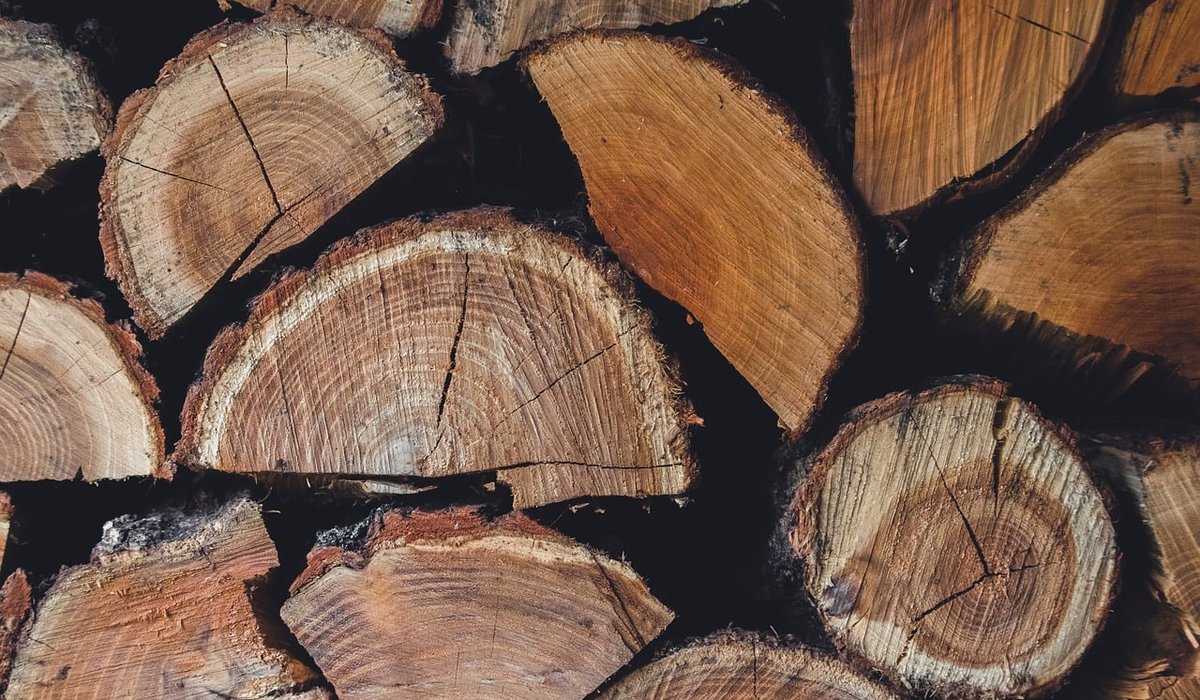
Use dry, seasoned hardwood: ash, oak, apple, cherry. Ash burns steady and gives good light. Avoid willow, which spits, and never burn treated timber, which throws off unpleasant fumes. Softwoods such as pine crackle loudly and burn fast, which is fine for getting things going but poor for a long evening.
Feed the fire in small handfuls rather than great armfuls. A couple of wrist-thick sticks every twenty minutes keeps a low, generous flame and a good bed of embers. That orange glow at the base is what actually lights faces; a roaring fire leaves everyone in silhouette.
The Token That Passes the Story
The simplest way to let a group speak without interrupting one another is to give the right to talk a physical form. Choose something that feels good in the hand and travels well: a smooth river stone, a hazelnut, a wooden spoon, an old horseshoe, a knuckle of driftwood.
The rules are few, and worth saying aloud the first time:
- Whoever holds the token speaks. Everyone else listens.
- The holder may tell a story, add to one, or simply pass the token on untouched.
- No interrupting, no correcting, no finishing someone else's sentence.
- Silence is allowed. A pause of ten or twenty seconds is not a failure; it is often where the next story comes from.
Pass it sunwise — clockwise, the direction of luck in British and Gaelic tradition. Going widdershins, or anticlockwise, was long held to be unlucky, and while nobody will faint if you do it, the clockwise habit adds a quiet sense of order. When the token returns to the first speaker, the round is complete, and anyone may begin a fresh one.
Drawing on British Folklore
You do not need to be a performer. The richest material is usually local. Ask the group a good opening question and the tales arrive on their own.
Try prompts such as: What is the oldest story you know about the place you grew up? Or: Has anything ever happened to you that you still cannot explain? Then let the token do its work.
If you want a well of traditional material to draw from, these keep a circle going for hours:
- Place legends: standing stones that walk to drink at a stream, holloways said to be haunted by a black dog, wells with a guardian fish.
- The seal folk: selkie tales from Orkney and Shetland, where a fisherman steals a skin and lives to regret it.
- Household spirits: brownies and hobs who help with the churning overnight, provided nobody leaves them a coat.
- Will-o'-the-wisp: Jack o' Lantern luring travellers into marshland, a staple of Fenland and Somerset telling.
- Weather lore: oak before ash, ash before oak; a red sky at night; the first cuckoo of spring.
Keep each tale short. Five minutes is plenty. A circle of eight people, each offering one, fills an evening beautifully.
Tending the Evening
Arrive at dusk rather than full dark so the fire can establish itself while there is still light to see by. Bring a torch per person, blankets for those who feel the cold, and a bucket of water within reach of the ring at all times.
Have a natural ending. Many circles close with a single line spoken by whoever holds the token last, or with everyone naming one thing they will remember from the night. Then damp the fire down properly — water, then earth, then a hand held close to check for warmth.
The point is not performance. It is the ordinary, ancient pleasure of sitting in the light of a small fire with people you like, taking turns, and letting the dark do the rest.
LEAVE A COMMENT