
Choosing Safe Firewood for British Woodlands
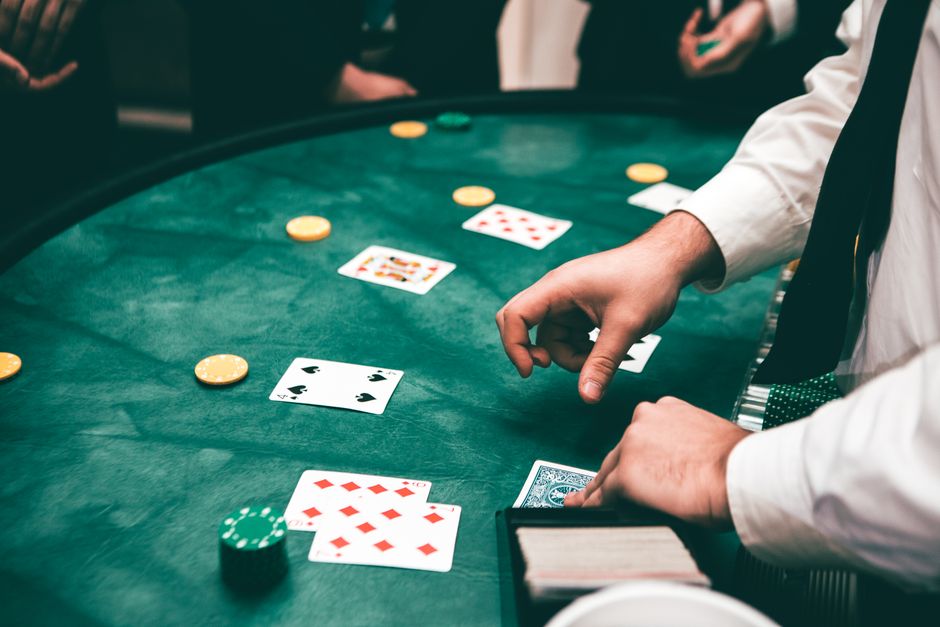
Ask any seasoned casino veteran about the phrase "the house always wins" and you will get a knowing smile. They have heard it a thousand times, usually from a friend who lost twenty bucks on a football accumulator and swore off betting forever. Yet those same veterans keep coming back to the tables, the reels, and the felt. Why? Because the house edge is not a death sentence. It is a negotiation. And once you understand the terms of that negotiation, iGaming stops being a lottery ticket and starts becoming something far more interesting.
The Real Math Behind the Casino's Cut
Let us start with the number that actually matters: the house edge. It is the mathematical advantage the casino holds on every bet you place, expressed as a percentage. In European roulette, that edge sits at a tidy 2.7% thanks to the single zero. American roulette doubles it to 5.26% because of that greedy double zero. Blackjack, played with basic strategy, can drop the house edge below 0.5%. And here is the kicker: some video poker variants, such as Jacks or Better with perfect play, operate at a house edge of roughly 0.46%.
Compare that to the lottery, where the effective return to player often hovers around 50%. Suddenly the casino floor looks generous. The point is not that you can beat the house every session. You cannot. The point is that the cost of playing is lower than most people assume, and the entertainment value per dollar is genuinely competitive with a night at the cinema.
Slots: The Good, The Bad, and The Volatile
Slots get a bad reputation among strategy purists, and partly for good reason. You cannot count cards on a spinning reel. But slots are not a monolith. Modern online slots vary wildly in volatility, and choosing the right machine for your bankroll is a skill in itself.
- Low volatility slots pay small amounts frequently. Think Starburst or Book of Ra Deluxe. Great for stretching a modest bankroll over a long session.
- Medium volatility offers a balance. Games like Gonzo's Quest sit here, with occasional meaningful wins and reasonable session length.
- High volatility slots such as Money Train 3 or San Quentin can pay thousands of times your stake, but you may spin 300 times without a sniff of a bonus round.
A practical tip: check the RTP (return to player) percentage inside the game's help menu before you spin. Anything above 96% is solid. Anything below 94% is asking a lot of your wallet. And never chase a bonus round that "feels due." Each spin is independent. The machine does not remember you.
Poker Is the Only Game Where You Beat People, Not the House
Here is the fundamental difference that makes poker so compelling. In blackjack or roulette, you are playing against a fixed mathematical model. In poker, you are playing against other humans, and the casino simply takes a small rake from the pot. That changes everything.
Skilled poker players can achieve a positive expected value over the long run. Not because they get lucky, but because they exploit the mistakes of weaker opponents. The three pillars of winning poker remain position, aggression, and patience.
- Position: Acting last gives you information. You see what everyone does before you decide. Play more hands from the button, fewer from the blinds.
- Aggression: Betting and raising wins pots in two ways. You either have the best hand, or you make everyone fold. Passive calling does neither consistently.
- Patience: The best players fold far more than beginners expect. Waiting for premium hands and good spots is not boring. It is profitable.
Online poker has an additional dimension: multi-tabling. Grinders often play six, twelve, or even twenty-four tables at once, relying on HUD statistics to make quick decisions. For casual players, though, one or two tables with full attention will usually produce better results than frantic clicking across a dozen screens. Before making a choice, it helps to review B52CLUB.
Betting: Where Knowledge Beats Luck
Sports betting is the one vertical where genuine expertise can shift the odds in your favor. Bookmakers set lines based on public opinion, injury news, and statistical models, but they are not infallible. A sharp bettor who follows a niche league, understands expected goals models, or tracks line movement can find value.
The single most important concept in betting is value, not winners. A bet on a 5.00 underdog is not bad because it loses. It is bad only if the true probability of that outcome is lower than 20%. Conversely, a bet on a 1.20 favorite can be terrible if the true probability is 90%. You are not picking winners. You are buying probabilities at a discount.
Bankroll management separates survivors from busted accounts. A common rule among professionals is to risk no more than 1% to 2% of your total bankroll on a single bet. That way, a brutal losing streak of ten bets does not wipe you out. It stings, sure. But you live to bet another day.
Responsible Play Is Not a Buzzword
Every legitimate iGaming operator now offers deposit limits, loss limits, session timers, and self-exclusion tools. Use them. Not because you are weak, but because they are free insurance. Setting a monthly deposit cap before you start playing is like buckling a seatbelt. You hope you never need it, but you are glad it is there.
Watch for the warning signs: chasing losses, hiding your play from family, betting more than you can afford to lose, or feeling anxious when you are not playing. If any of that sounds familiar, step away and reach out to a support service. The games will still be there tomorrow. Your rent money might not be.
Final Thoughts
iGaming is not a get-rich-quick scheme, and anyone who tells you otherwise is selling something. But it is also not the mindless money pit that critics describe. It is a spectrum. On one end sits the lottery-style scratch card, pure luck with a brutal edge. On the other end sits high-level poker and sports betting, where skill genuinely moves the needle.
The players who enjoy iGaming most are the ones who treat it as entertainment with a cost, not an investment with a guaranteed return. They know the RTP of their favorite slots. They know the rake at their poker table. They set limits and stick to them. And they walk away when the fun stops. That is not pessimism. That is just smart play.
LEAVE A COMMENT